Hotel Lighting Design
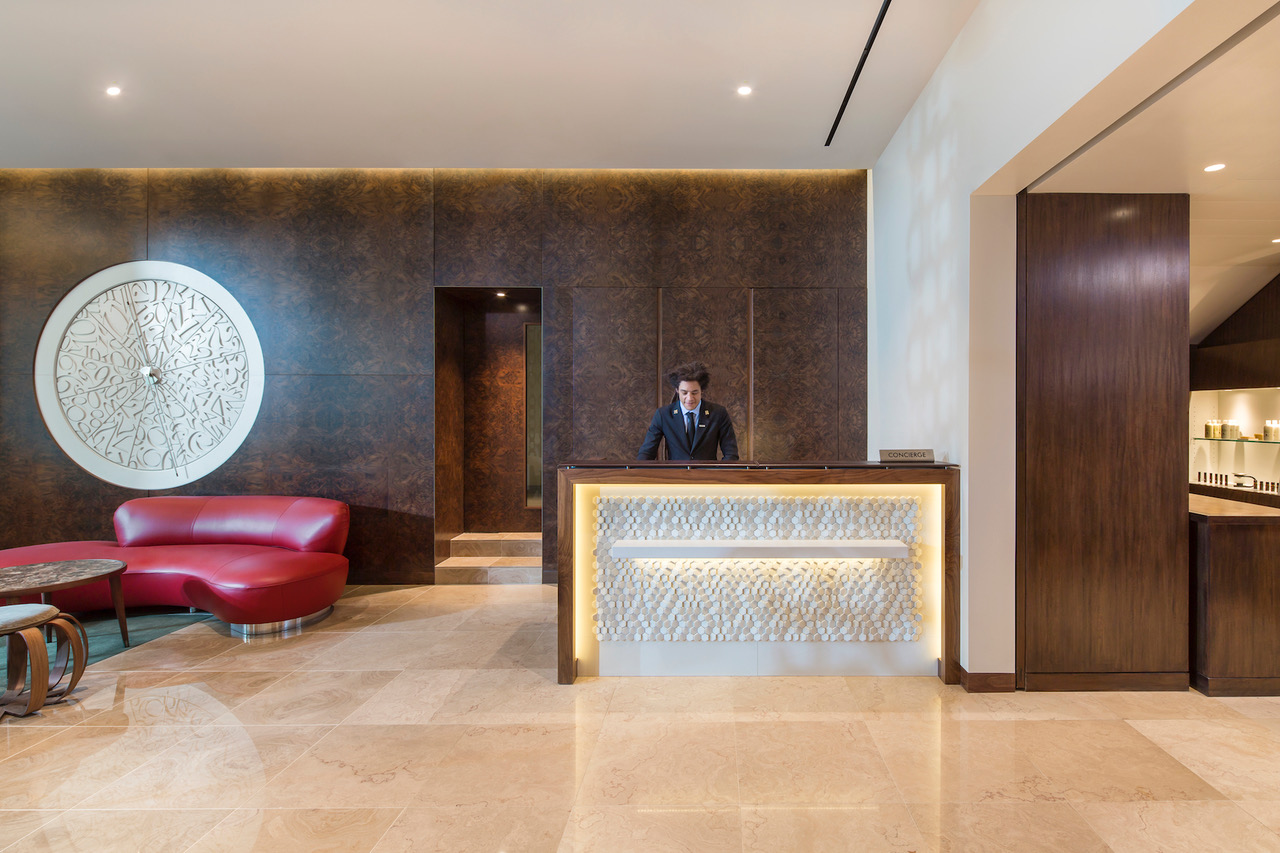
Hotel lighting design is all about atmosphere. Shaping how a place feels from the moment someone walks in.
It helps to define the brand, guides people intuitively through spaces, and creates comfort. When it’s done well, you barely notice it; you just feel that it works.
There are plenty of guidelines and regulations from BS EN 12464-1 on workplace lighting to BS 5266 and EN 50172 for emergency lighting, BS 8300 for accessibility, and the Society of Light and Lighting (SLL) lighting guides and TM65/TM66 sustainability documents. WELL and BREEAM add the wellness and environmental layers, and of course, Part L of the Building Regulations keeps us focused on energy efficiency. But beyond the standards, it’s about understanding people, mood and rhythm.
A few simple principles sit at the heart of good hotel lighting. Always light the verticals — faces, walls, and signage are what guests notice most. Get the colour right – tone and warmth influence how relaxed or alert we feel. Give people control that’s intuitive, not confusing. And use fittings that are efficient, robust, and easy to maintain.
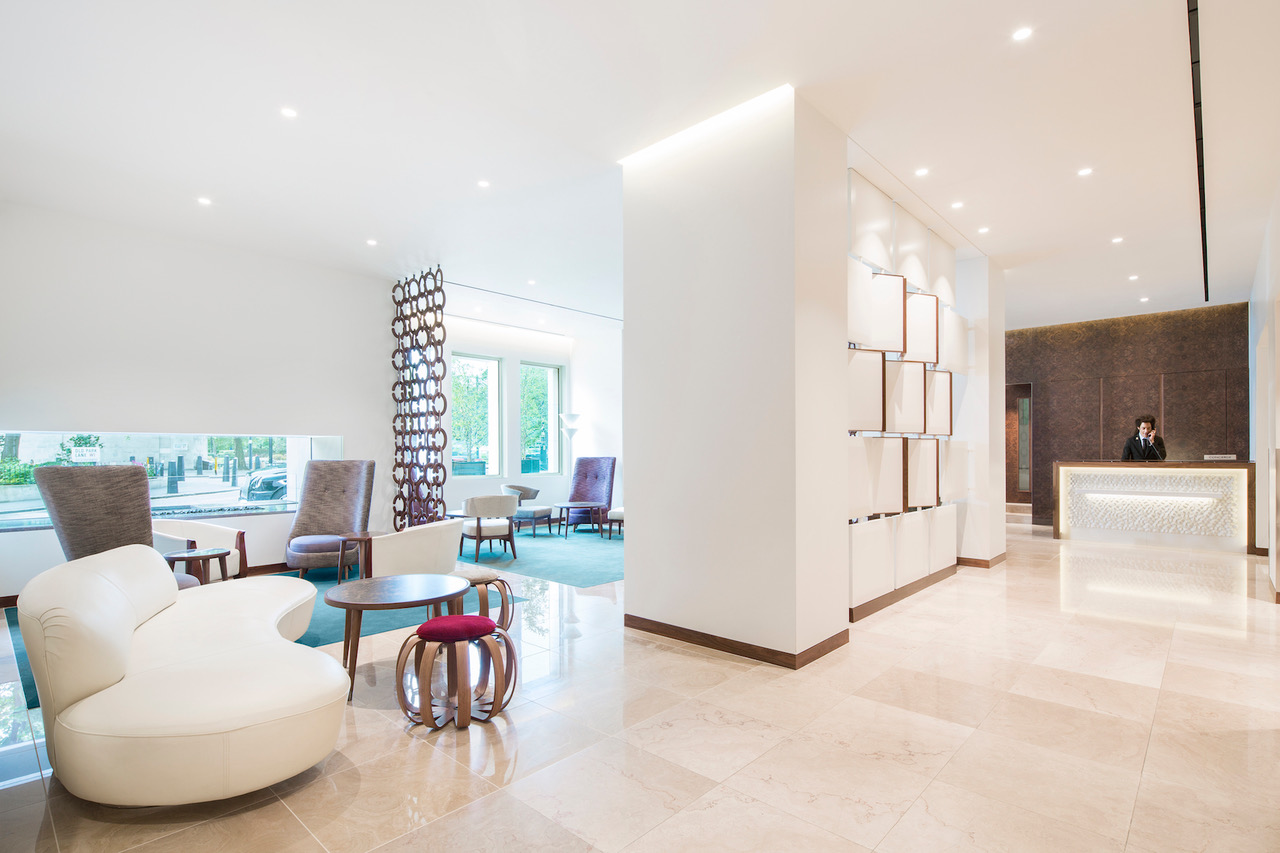
Take the reception lobby. The first impression of the brand. Light levels somewhere around 150 to 300 lux for the general ambience and 300 to 500 lux at the reception desk. Vertical light helps people feel comfortable and recognisable (also important for CCTV). Then there’s the feature lighting: sculptural pendants or bespoke installations that define the space and inject personality. These need to feel special. There’s nothing worse than discovering your “statement piece” glowing above a fast-food counter down the road. Bespoke or custom-finished fittings create identity and say something about the care that’s gone into the design. Lobbies also need to change character through the day. Brighter in the morning and softer, warmer tones as evening arrives. A simple control system or even a timeclock or daylight sensor can shift scenes automatically, keeping the feel consistent without staff having to think about it.
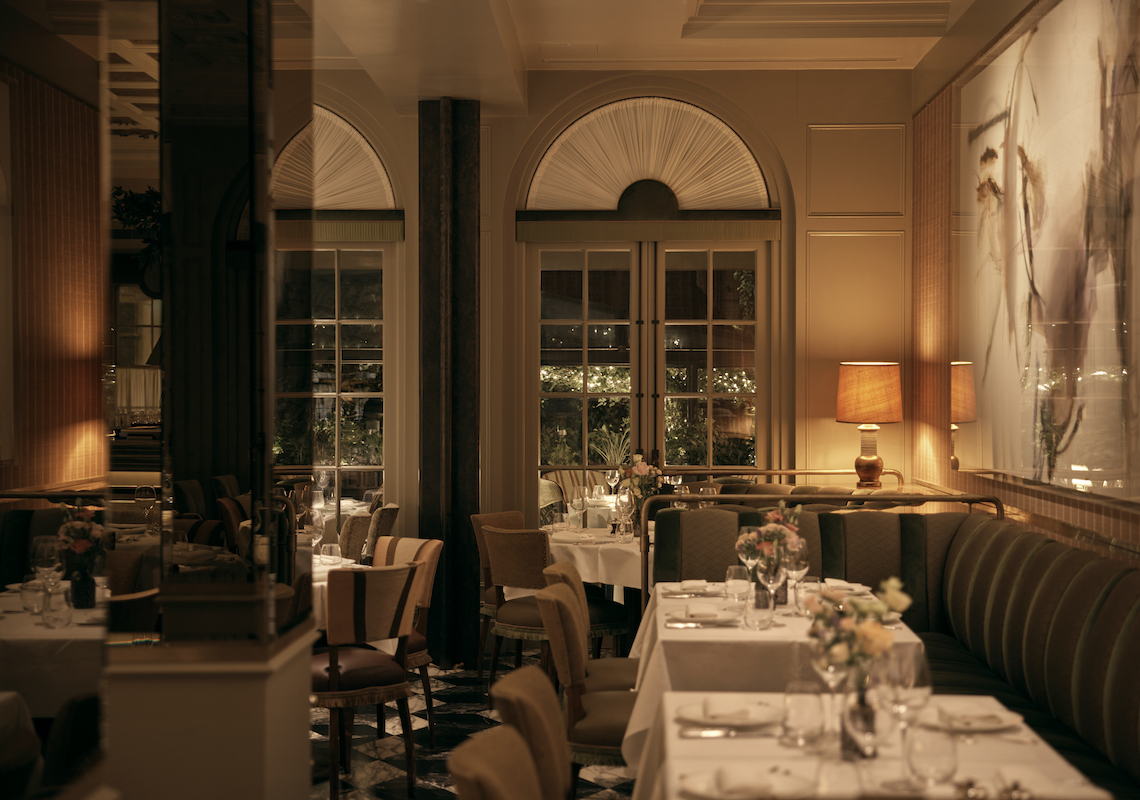
In restaurants and bars, light becomes part of the dining experience. It needs to flatter faces, make food look irresistible and still allow staff to see what they’re doing. High colour quality — CRI 90 and above — is essential. The traditional 2700K warmth is now often pushed even further, with designers exploring 2000K, 2200K and even 1800K tones for intimate, candle-like settings. That ultra-warm light creates a sense of exclusivity and calm that guests instinctively respond to. See our separate blog dedicated to restaurant lighting for more information on lighting F+B spaces.
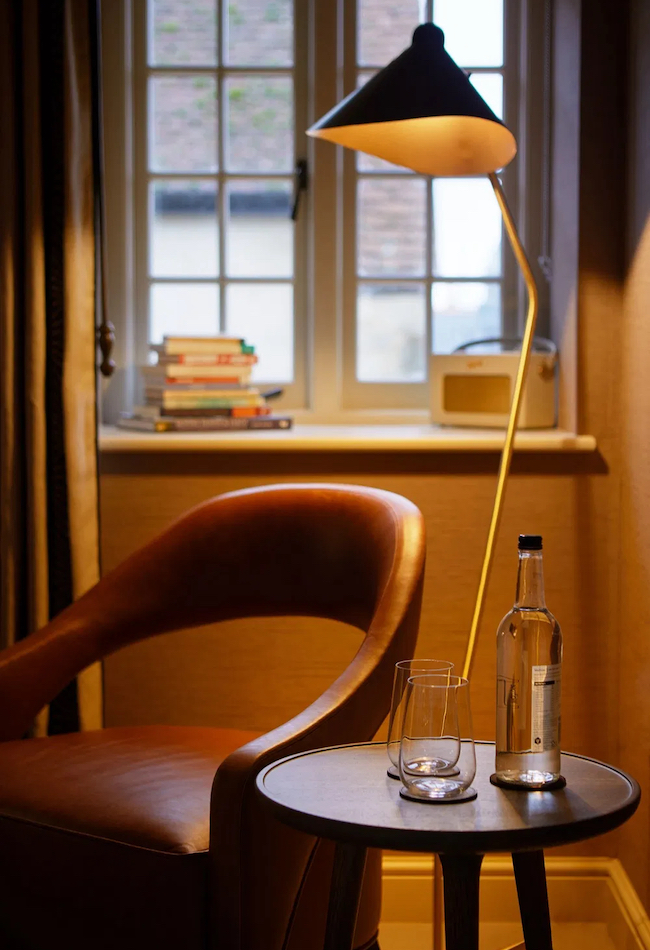
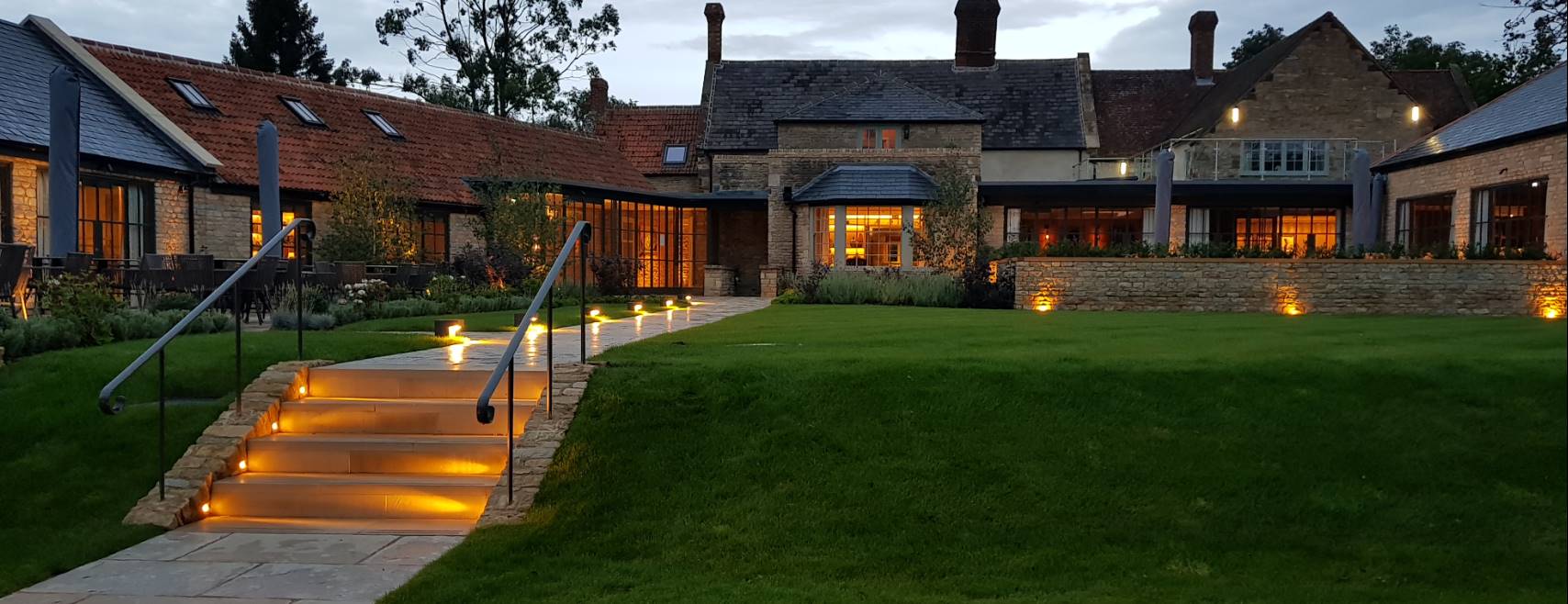
Corridors, lifts and stairs are too often treated as afterthoughts, but they’re where guests spend a surprising amount of time. These spaces should feel calm, safe and well-kept, not harshly lit. Soft general lighting with gentle wall washing avoids the “runway” look, while indirect ceiling light keeps the space feeling open. Around 30 to 100 lux (max) in corridors and 150 lux on stairs is enough. Presence sensors are invaluable here — the lights can dim down to a soft background glow when no one’s around, then gently rise when someone walks through. It saves energy, extends lamp life, and keeps the atmosphere relaxed even at night.
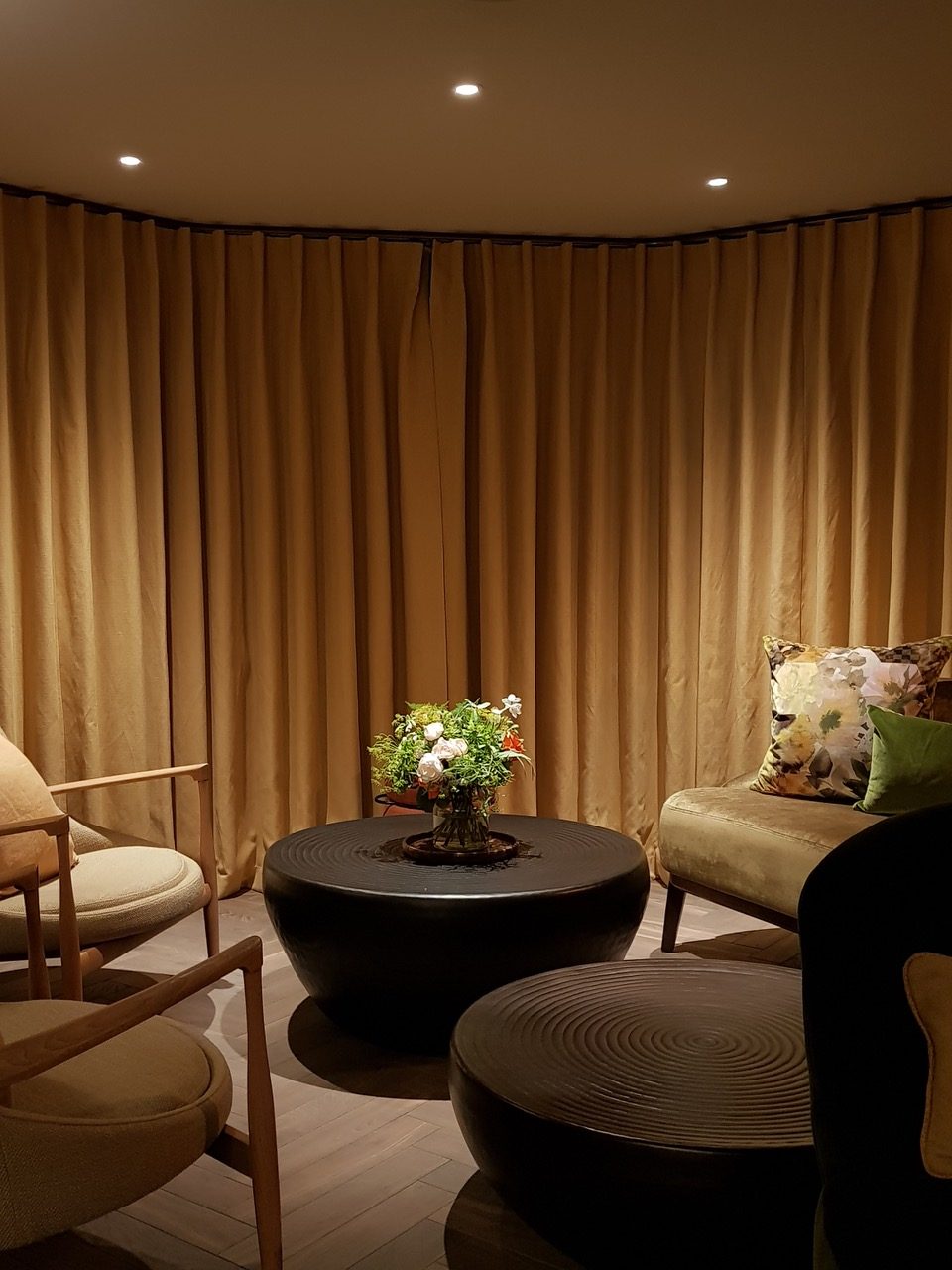
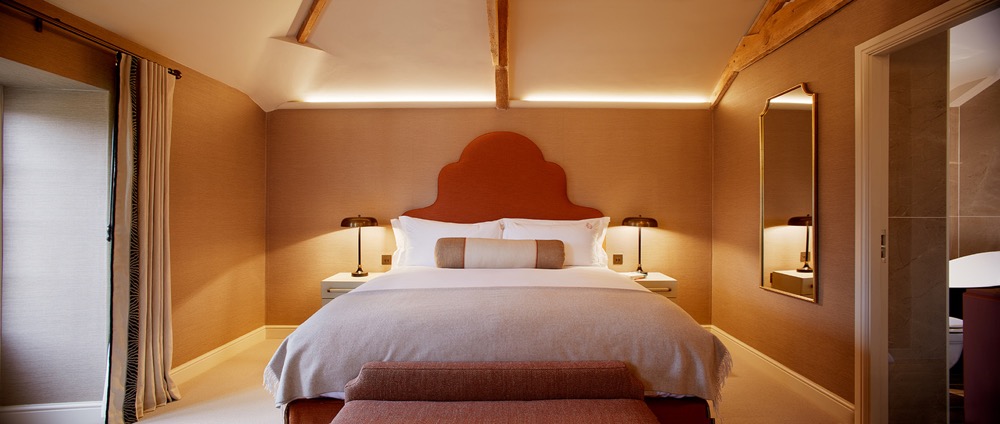
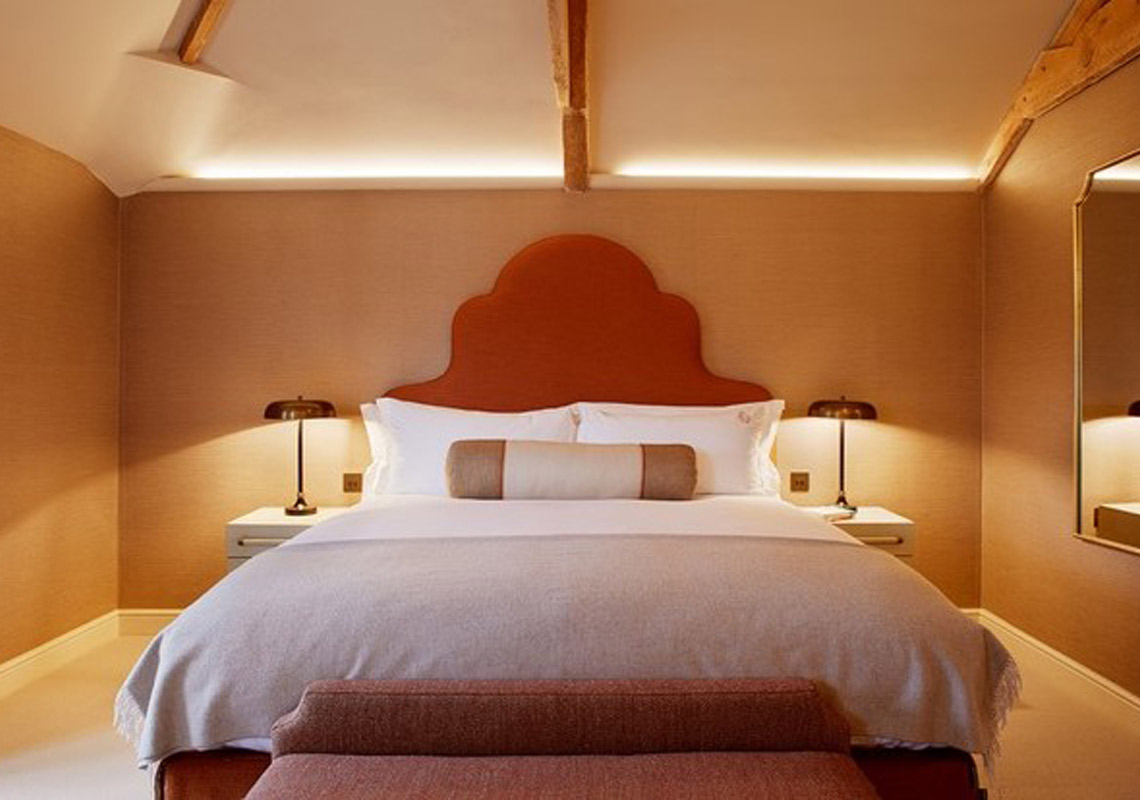
Guest rooms are where lighting becomes personal. This is the guest’s retreat, and everything should feel simple and comfortable. Warm 2700K light is the foundation, with glare-free task lighting at desks and mirrors around 300 lux and a high CRI for accurate colour. Bathrooms need similar attention — soft ambient light with stronger vertical illumination at mirrors makes a huge difference to how people feel when they look at themselves. In bedrooms, it’s often best to avoid overhead downlights altogether, using accent lighting or hidden sources instead. A low-level night light marking the route to the bathroom can be far more thoughtful than a bright ceiling fitting.
And then there’s control — perhaps the most important detail. We’ve all been in hotel rooms where it takes five minutes to figure out which switch does what. It shouldn’t be that way. A switch at the door and one by the bed is all you really need, with a few clearly labelled scenes like “Morning”, “Relax”, “Work” and “Night”. Add a master on/off at both points and you’ve solved the problem elegantly.
Sustainability underpins it all. Good lighting design should be energy efficient, maintainable and built to last. Fittings should have replaceable components, not sealed units destined for landfill. Compliance with Part L is mandatory in the UK, but thoughtful design goes further — using LENI calculations to prove efficiency and asking suppliers for TM65 and TM66 data to measure embodied carbon and circularity.
Modern hotel lighting is a mix of performance and personality. The current trend leans toward warmer colour temperatures, simple and intuitive controls, and decorative pieces that feel unique to the property rather than something pulled from a catalogue. Energy saving through PIR sensors and smart scene setting is part of the DNA now, not an afterthought.
Ultimately, every space – from the lobby to the corridor to the guest room – should feel considered, comfortable and coherent. If guests never think about the lighting but always remember how good the place felt, then the design has done exactly what it should.